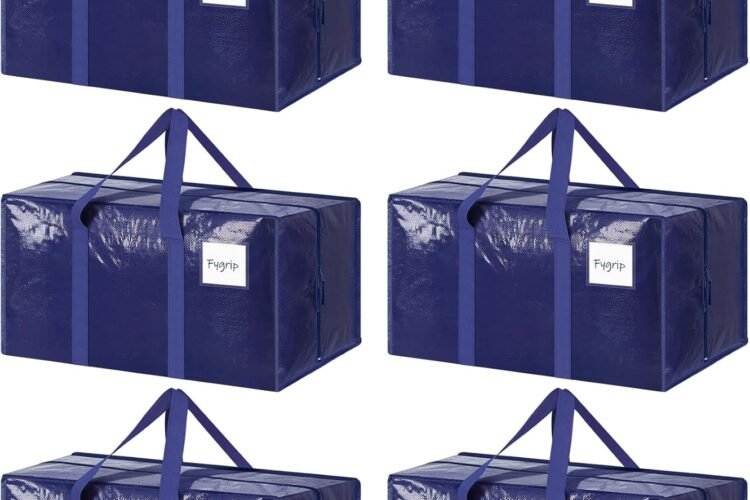
Anyone who has packed up an apartment, prepared for a college move-in, or tried to organize a cluttered closet knows that the right containers can make or break the entire process. Cardboard boxes tear, plastic bins crack, and garbage bags rip at the worst possible moment. This is where heavy-duty fabric moving bags with reinforced zippers and built-in handles have found a steady place in the world of home organization and relocation. In this article, we’ll take a closer look at one such option — a 6-pack of extra-large, dark blue moving bags designed for durability, ease of transport, and multi-purpose storage use.
Whether you’re a student heading to campus, a family transitioning between homes, or simply someone looking to reorganize a closet or garage, understanding what these bags offer — and where they fit into your broader moving or storage plans — can help you make a more informed decision.
Introduction to Heavy-Duty Moving Bags
Moving bags occupy a unique middle ground between traditional cardboard boxes and rigid plastic storage bins. They’re generally made from woven or non-woven fabric material, reinforced along stress points, and designed to hold a substantial amount of weight without tearing. Unlike cardboard, they don’t lose structural integrity when exposed to minor moisture, and unlike hard plastic totes, they can be folded flat when not in use, saving valuable storage space.
This particular product comes as a set of six large, dark blue bags, each equipped with a strong zipper closure and comfortable carrying handles. The emphasis on “extra heavy duty” construction suggests these bags are intended for people who need something more resilient than a standard tote — think bulky comforters, stacks of folded clothing, dorm room supplies, or seasonal items that need to be moved or stored securely.
The growing popularity of reusable, fabric-based moving bags reflects a broader shift in how people think about packing. Rather than accumulating a pile of cardboard boxes that get used once and discarded, many people are opting for containers that can be reused across multiple moves, storage cycles, or even loaned to friends and family during their own relocations.
Key Features Worth Understanding
When evaluating a product like this, it helps to break down what specific features are being offered and why they matter in real-world use.
Extra Heavy-Duty Construction
The description highlights a reinforced build designed to handle substantial weight and repeated use. Heavy-duty fabric bags typically use thicker, tightly woven material that resists tearing, snagging, and stretching under load. This matters especially when packing dense items like books, shoes, or folded linens, which can quickly overwhelm a flimsier bag.
Strong Zipper Closures
A weak zipper is often the first point of failure in soft-sided storage products. Once a zipper breaks, the entire bag becomes far less useful, since the contents can spill out or the bag can no longer close securely. A reinforced, strong zipper closure is designed to withstand repeated opening and closing, along with the pressure of a fully packed bag.
Comfortable Carrying Handles
Handles matter more than people often expect, particularly when a bag is fully loaded. Thin straps or handles without reinforcement can dig into hands or tear away from the bag’s body under strain. Comfortable, sturdy handles are meant to distribute weight more evenly, making it easier to carry a heavy bag up a flight of stairs, load it into a car trunk, or hand it off to another person during a move.
Large Capacity
These bags are described as large, which generally means they’re suited for bulkier items — comforters, pillows, winter coats, stacks of clothing, or a mix of household items that would otherwise require multiple smaller containers. Larger capacity can reduce the total number of bags or boxes needed for a move, which may simplify the packing and loading process.
Dark Blue Color and Uniform Design
A consistent color and design across all six bags can be more than just a visual preference. Uniform, matching bags are easier to stack, identify, and organize compared to a mismatched assortment of boxes and totes. For students or families managing multiple bags at once, having a consistent set can make it easier to keep track of belongings during a hectic move.
Set of Six
Buying in a set rather than individually can be a practical choice for anyone who needs multiple containers for one project. A six-pack allows for organizing items by category — for example, one bag for bedding, one for clothing, one for kitchen items, and so on — without needing to purchase bags separately over time.
How These Moving Bags Can Be Used
One of the appealing aspects of heavy-duty zippered moving bags is their versatility. While the name suggests a primary use for moving, these bags tend to serve a much broader range of purposes throughout the year.
Relocation and moving day. The most obvious use case is packing up a home, apartment, or dorm room for a move. Because the bags are foldable and lightweight when empty, they can be stored flat until needed and then quickly filled when moving day arrives.
College move-in and move-out. Students often deal with tight schedules, limited help, and items that need to travel between a dorm room, a car, and a family home. Bags with sturdy handles and large capacity can simplify the process of transporting bedding, clothing, and personal items in fewer trips.
Seasonal clothing storage. Many households rotate clothing by season, storing winter coats and sweaters during summer months and vice versa. A zippered fabric bag can protect clothing from dust while remaining easy to slide onto a closet shelf or under a bed.
Closet organization. Beyond moving, these bags can serve as long-term storage solutions for out-of-season shoes, extra bedding, or items that aren’t used daily but still need to be kept accessible.
Travel and road trips. Because the bags are soft-sided and foldable, they can sometimes be more practical than rigid suitcases for transporting bulky soft goods, especially when trunk space is limited.
Donation and decluttering projects. When sorting through items to donate or give away, having a sturdy, reusable bag on hand can make the process more organized than relying on plastic garbage bags, which are more prone to tearing.
Dormitory and shared living storage. In shared spaces where storage is limited, bags that can be folded flat and tucked under a bed or in a closet offer a practical way to store belongings without taking up excessive room.
Who These Bags May Be Suitable For
Different households and situations call for different storage solutions, so it’s worth considering who might find this type of product particularly useful.
College students and their families often deal with the twice-a-year cycle of moving into and out of dormitories. Bags that are easy to carry, fold flat for storage between semesters, and hold a large volume of clothing or bedding can be a practical fit for this recurring need.
Renters who move frequently may prefer reusable fabric bags over cardboard boxes, since they can be folded up and reused for the next move rather than discarded.
Families managing a household move may appreciate having a matching set of bags to organize belongings by room or category, making unpacking more straightforward.
People with limited closet or storage space might use these bags for compressing and organizing seasonal items, keeping a closet or spare room tidier.
Anyone helping a friend or relative move may find a reusable set convenient to lend out, avoiding the need to hunt down cardboard boxes at the last minute.
That said, this type of bag may be less suitable for people who need completely rigid, stackable storage — for example, for fragile items like dishware or electronics, where a hard-sided container might offer more structural protection.
Important Things to Consider Before Purchasing
While heavy-duty moving bags offer clear conveniences, it’s worth thinking through a few practical considerations before deciding if they’re the right fit for your needs.
Weight limits still apply. Even heavy-duty bags have practical limits to how much weight they can safely carry. Overloading any soft-sided bag — no matter how sturdy — can put strain on the seams, zipper, and handles. It’s generally wise to distribute weight across multiple bags rather than trying to overstuff a single one.
Material is not the same as waterproofing. “Heavy duty” typically refers to tear resistance and structural strength rather than complete water resistance. If you’re storing items in a damp basement, garage, or during transport in rainy weather, it’s worth considering additional protection, such as placing items in plastic bags inside the fabric bag.
Storage space when not in use. While these bags are designed to fold flat, six large bags will still take up some room when empty. It’s helpful to think about where they’ll be stored between uses, particularly if you’re purchasing them for occasional or seasonal use rather than an immediate move.
Zipper maintenance. Like any zippered product, occasional care — such as avoiding forcing a stuck zipper or overpacking a bag until it’s difficult to close — can help extend the usable life of the closure system over time.
Uniform sizing may not suit every item. Because all six bags are the same large size, smaller items or oddly shaped belongings might not be packed as efficiently as they would be in a mix of different-sized containers. It can help to pair a set like this with a few smaller bins or boxes for miscellaneous items.
Handle stress over time. Even reinforced handles can experience wear with repeated heavy use over years. For infrequent movers, this may be less of a concern, but those planning to use the bags regularly might want to distribute weight evenly and avoid habitually overloading any single bag.
Comparing General Storage and Moving Categories
To put this type of product into context, it can help to compare heavy-duty fabric moving bags with other common packing and storage options, without singling out any particular competing brand.
Cardboard Boxes
Cardboard remains a widely used option for moving, largely because it’s inexpensive and easy to find. However, cardboard is vulnerable to moisture, tends to weaken with repeated use, and often needs to be assembled and later broken down or discarded. Fabric moving bags, by contrast, arrive ready to use and can be folded flat for future use rather than thrown away.
Rigid Plastic Bins
Plastic totes offer strong protection for fragile or valuable items and typically stack well in storage. Their downside is that they take up a fixed amount of space even when empty, and they can be heavier and more cumbersome to carry long distances compared to a soft-sided bag with handles. Fabric moving bags tend to be lighter and easier to maneuver, though they may offer less rigid protection for breakable items.
Garbage Bags or Thin Plastic Bags
Some people default to using ordinary garbage bags for a quick move, especially for clothing or soft items. While convenient in a pinch, these bags are prone to tearing, especially when carrying heavier loads or navigating stairs. Heavy-duty moving bags are specifically reinforced to reduce this risk, offering more reliable handling for the same types of soft goods.
Suitcases and Duffel Bags
Suitcases are excellent for travel but are often limited in capacity and can be expensive to purchase in bulk. For a full household move, using several suitcases isn’t usually practical. Moving bag sets, like the six-pack discussed here, are generally more cost-effective and space-efficient when a larger volume of items needs to be packed at once.
Each of these storage categories has its own strengths, and many people find that a combination — such as pairing fabric moving bags for clothing and soft goods with rigid bins for fragile items — offers the most balanced approach to a move or storage project.
Frequently Asked Questions
Are these bags only useful for moving?
While designed with moving in mind, many people use bags like this for ongoing storage purposes, such as organizing seasonal clothing, extra bedding, or off-season items in a closet or under a bed.
Can these bags be folded flat when not in use?
Fabric moving bags are typically designed to fold down when empty, which can make them easier to store compared to rigid plastic bins that maintain their shape regardless of whether they’re full.
Is the zipper likely to hold up under heavy use?
The product is marketed with a reinforced, strong zipper intended to handle the stress of a fully packed bag. As with any zippered product, avoiding overpacking and forcing a stuck zipper can help maintain its function over time.
How many items can typically fit in one large bag?
This can vary widely depending on the type of items being packed. Larger, bulkier items like comforters or winter coats will fill a bag more quickly than smaller, more compact items like folded t-shirts.
Are these bags a good fit for a college dorm room?
Given the emphasis on large capacity, sturdy handles, and durable construction, this type of bag is often considered by students and families managing the twice-yearly process of moving in and out of dormitories.
Can they be reused for multiple moves?
Because they’re designed with heavy-duty materials rather than single-use cardboard, many people use these types of bags across multiple moves or storage cycles rather than discarding them after one use.
Do they offer protection from water or moisture?
Heavy-duty fabric construction generally focuses on tear resistance rather than full waterproofing. For extra protection in wet conditions, it may help to use additional plastic liners for sensitive items.
Final Thoughts
Packing and organizing belongings — whether for a cross-town move, a college semester, or a seasonal closet refresh — often comes down to having the right containers on hand. A six-pack of extra-large, heavy-duty moving bags with reinforced zippers and sturdy handles offers a reusable, space-efficient alternative to cardboard boxes or flimsy plastic bags, particularly for soft goods like clothing, bedding, and other bulky items.
As with any storage product, it’s worth weighing the practical considerations — including weight limits, moisture exposure, and how the bags will be stored when not in use — against your specific needs. For many households, students, and frequent movers, a durable, uniform set of bags like this can bring a bit more order and reliability to an otherwise chaotic process.